

Nature has provided us with everything we need to nourish our body, and scientists discover which nutrients are best for specific purposes.
We’ve done our research to find out exactly which nutrients have been researched and shown to work for common skin health concerns.
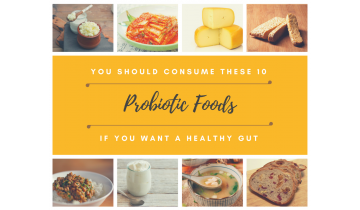
Our digestive system is home to roughly 100 trillion bacteria. A balance between good and bad gut bacteria in the intestine is important for health. Recent studies found that the imbalance of gut bacteria types may play a role in the development of obesity, metabolic syndrome, certain cancers or even some mental disorders! Probiotics are live microorganisms that give health benefits when they are at the right place. Bacteria that are beneficial on our skin might be harmful when they are in our gut. Now, let’s take a look at the 10 common food sources that can transport the good bacteria into our gut.

The Centers for Disease Control and Prevention estimate that 56,000 people a year die from flu-related illnesses.1 During the 2015-2016 flu season 310,000 people were hospitalized due to flu-related illnesses.2
Colds and the flu are often treated with a variety of medications designed to reduce symptoms but that have no ability to activate the body’s own immune response to fend off invading bacteria or viruses.
Scientists wanted to find a way to stop the common cold and flu before they take hold.

When your doctor tells you to exercise, what’s the first thing that comes to mind? If it’s a negative thought or bad memory, you’re pretty much setting yourself up to fail.
If this sounds familiar, you may need to do a complete 180 on how you think about exercise, or simply just tweak a few things.
To help you set a new course, here are some helpful tips to get you moving, grooving and re-inspired.

A cancer diagnosis is probably just about the scariest news anyone could ever receive in their life. It can also be very confusing. There’s tons of information to weed through and it’s very easy to become overwhelmed, scared, and discouraged.
As such, here’s an attempt to simplify the basics of a critical component for anyone following a cancer diagnosis — your nutrition.
A healthy, nutritious diet is really important when you’re being treated for cancer. It can make a big impact on the outcome of your treatments and your quality of life. So, it’s essential that you take your diet very seriously during this time.
If you or someone you love has been diagnosed with cancer, we really hope this helps to take some of the guesswork out of the equation.

Skin cancer accounts for 40% of all human malignancies.1
Over 90% of non-melanoma skin cancers are caused by ultraviolet (UV) radiation exposure.2
UV causes skin cancer by damaging cell DNA, inhibiting DNA repair, and impeding the removal of aged cells that cannot be repaired.3-5
Scientists have identified a plant extract that—taken orally prior to sun exposure—inhibits UV-triggered DNA damage.6,7

A healthy heart is characterized by the following four physiological states:
- Healthy Endothelial Cells
- Low Vascular Inflammation
- Healthy Blood Pressure
- Healthy Heart Cell Energy

"Yoga" means union that brings an incoherent and scattered mind to a reflective state for communion of the human soul with divinity. It ensures optimal condition of every aspect of life, be it body, mind, energy or soul. Let's explore in brief the eight stages of Yoga that promise not only health, but answers to all imaginable existential predicaments of the human mind. Yoga is not only for India, it belongs to the world!

A staggering number of Americans suffer from a disorder called “metabolic syndrome” that is characterized by a combination of:1
- High blood sugar
- Increased blood pressure
- Abdominal obesity
- Abnormal cholesterol and triglyceride levels
Those with metabolic syndrome are at increased risk for heart attack, stroke, type II diabetes and early death.2

Sure, ideally everyone would be eating fresh, non-processed foods all of the time, but we get it. We know that it can be expensive to eat this way and that sometimes convenience and simple economics guide our decisions. So, here’s the question that begs answering: are there any healthy packaged foods? The answer is yes.

For all of you who think you just can’t eat healthy, you’re probably selling yourself short. A new study shows that these habits can, in fact, be learned.

Each morning, about 64% of adult Americans consume at least one cup of coffee.1
The brain responds by releasing noradrenaline that provides a quick energy boost. This is often followed by a “caffeine letdown” whereby noradrenaline in the brain is depleted and subsequent coffee fails to provide sufficient mental boost.
Is your skin losing its once youthful appearance? Have you noticed deeper and deeper wrinkles and more and more dark colored age-spots? We actually find this interesting.
Despite the cosmetic industry’s promises of youthful skin, aging men and women seem to be spending more money on serums and creams, yet remain unsatisfied with the results.

It’s no coincidence that our name is Life Extension. Our sole purpose is to find ways to extend the healthy, human life span. And if you haven’t noticed yet, it really is our passion.
Of course, eating healthy and exercising are top priorities for any anti-aging program, but we think there’s more to the story than that.

Social Login